



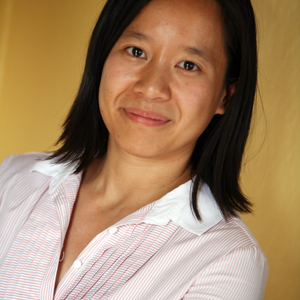

Emily Chan
- Media Contact
- SPN Mentor
Emily Chan is the Dean of the Faculty and Professor of Psychology. Colorado College's liberal arts academic mission is created by the shared commitment of the community of faculty teacher-scholars, librarian, staff in all areas of the college, and students and alumni. Our office is committed to ensuring inclusive success and thriving of faculty, librarians, and staff who contribute to the academic mission. Sharing in the co-visioning of the big-picture and long-range view of College priorities and opportunities, our office works with all administrative divisions and offices to advance the shared goals of the college. With oversight of the academic program, our office strives to be a partner to invest in and respond to needs related to academic achievements, scholarly pursuits, teaching and learning, and the wellbeing of our faculty, librarian, and staff in the administrative division.
The Dean of the Faculty facilitates and supports with passion and commitment the professional excellence, integrity, diversity, and a thriving faculty community through a broad range of activities, ranging from faculty affairs (faculty recruitment and hiring; the shape and growth of the faculty; faculty research development; and faculty career development), departmental affairs, the curriculum, academic planning and management, new initiatives, and resource allocation.
Chan joined CC in 2004 as a faculty member in Psychology, and has since taught courses in social psychology, research design, prejudice and stereotyping, cultural psychology, judgement and decision making, and Asian and Asian American psychology. From 2014 to 2018, she served as Associate Dean of Academic Programs and Strategic Initiatives, overseeing strategy, operations, and implementation of initiatives in international study, field study, summer session, and ADEI initiatives for both students and faculty. She has also previously served as Director of the Bridge Scholars Program and the Race, Ethnicity & Migration Studies Program. Chan worked with the college community to shape and implement numerous strategic initiatives and ADEI programs. She is also a member of the HERS, APA-LIWP, AALAC, and ACE Fellowship leadership communities.
Primary Interests:
- Attitudes and Beliefs
- Causal Attribution
- Intergroup Relations
- Judgment and Decision Making
- Person Perception
- Prejudice and Stereotyping
- Social Cognition
Note from the Network: The holder of this profile has certified having all necessary rights, licenses, and authorization to post the files listed below. Visitors are welcome to copy or use any files for noncommercial or journalistic purposes provided they credit the profile holder and cite this page as the source.
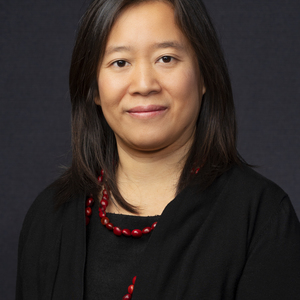
Image Gallery
Journal Articles:
- Chan, E. (2019). Student research and publication: Strategic planning for inclusion using a systems mapping approach. Frontiers in Psychology, 10.
- Chan, E., & Ybarra, O. (2002) Interaction goals and social information processing: Underestimating one’s partners but overestimating one’s opponents. Social Cognition, 20, 409-439.
- Chan, E., Ybarra, O., & Schwarz, N. (2006) Reversing the affective congruency effect: The role of target word frequency of occurrence. Journal of Experimental Social Psychology, 42(3), 365-372.
- Kervyn, N., Chan, E., Malone, C., Korpusik, A., & Ybarra, O. (2014). Not all disasters are equal in the public's eye: The negativity effect on warmth in brand perception. Social Cognition, 32, 256-275.
- Ybarra, O., Burnstein, E., Winkielman, P., Keller, M. C., Manis, M., Chan, E., & Rodriguez, J. (2008) Mental exercising through simple socializing: Social interaction promotes general cognitive functioning. Personality and Social Psychology Bulletin, 34, 248-259.
- Ybarra, O., Chan, E., & Park, D. C. (2001). Young and old adults’ concerns with morality and competence. Motivation and Emotion, 25, 85-100.
- Ybarra, O., Chan, E., Park, H., Burnstein, E, Monin, B., & Stanik, C. (2008). Life’s recurring challenges and the fundamental dimensions: An integration and its implications for cultural differences and similarities. European Journal of Social Psychology, 38, 1083-1092.
- Ybarra, O., Keller, M.C., Chan, E., Garcia, S. M., Sanchez-Burkes, J., Morrison, K. R., & Baron, A. S. (2010). Being unpredictable: Friend or foe matters. Social Psychological and Personality Science, 1, 259-267.
Other Publications:
- Chan, E., Ybarra, O., Park, D. C., Rodriguez, J., & Garcia, J. (2007). Trusting medical authorities: Some cognitive aging and social vigilance considerations. In D. C. Park & L. Liu (Eds.), Medical adherence and aging: Social and cognitive perspectives. Washington, DC: American Psychological Association.
- Ybarra, O., Keller, M. C., Chan, E., Hutsler, J., Garcia, S. M., & Sanchez-Burks. (2007). The social prediction dynamic: A legacy of cognition and mixed-motives. In J. P. Forgas, M. Haselton, & B. von Hippel (Eds.), The evolution of the social mind: Evolutionary psychology and social cognition. Psychology Press: New York.
Courses Taught:
- Analysis with R
- Asian American Psychology
- Conflict Management and Negotiation
- Cultural Psychology
- Industrial and Organizational Psychology
- Introduction to Psychology: Bases of Behavior
- Peer Mentoring for Student Success
- Prejudice and Stereotyping
- Problem Solving in the Age of COVID-19
- Psychology of Diversity
- Psychology of Prejudice and Intergroup Relations
- Research Design and Statistics
- Social Cognition
- Social Psychology
Emily Chan
Department of Psychology
Colorado College
14 East Cache la Poudre
Colorado Springs, Colorado 80903
United States of America
- Phone: (719) 227-8202
